
Building the Investment Case for Stronger Foodborne Disease Surveillance Systems
Foodborne diseases impose a significant health and economic burden worldwide, particularly in low- and middle-income countries (LMICs). To support implementation of the World Health Organization’s (WHO) Global Strategy for Food Safety 2022–2030, the World Health Organization (WHO) and the International Finance Corporation (IFC) engaged Limestone Analytics to support the development of an investment case for strengthening foodborne disease surveillance systems.
Limestone contributed to the analytical work underpinning the investment case, helping quantify the health and economic returns of investing in stronger food safety infrastructure within a representative LMIC context. Our team supported the development of the initial investment case by assessing the potential benefits of strengthening surveillance systems, laboratory capacity, reporting processes, and cross-sector coordination.
The analysis demonstrated that investments in foodborne disease surveillance can generate substantial returns. Across the countries studied, every US$1 invested in improving surveillance capacity was estimated to generate an average of US$46.60 in benefits over a 10-year period. The modelling also projected that strengthened surveillance systems could avert approximately 19 million cases of foodborne illness, save more than 13,000 lives, and generate approximately US$23 billion in health benefits over the same period.
This work provides policymakers and development partners with robust evidence to support strategic investments in food safety systems. By demonstrating the significant health and economic value of strengthening foodborne disease surveillance, the project contributes to global efforts to improve public health, enhance food system resilience, and reduce the burden of foodborne disease.

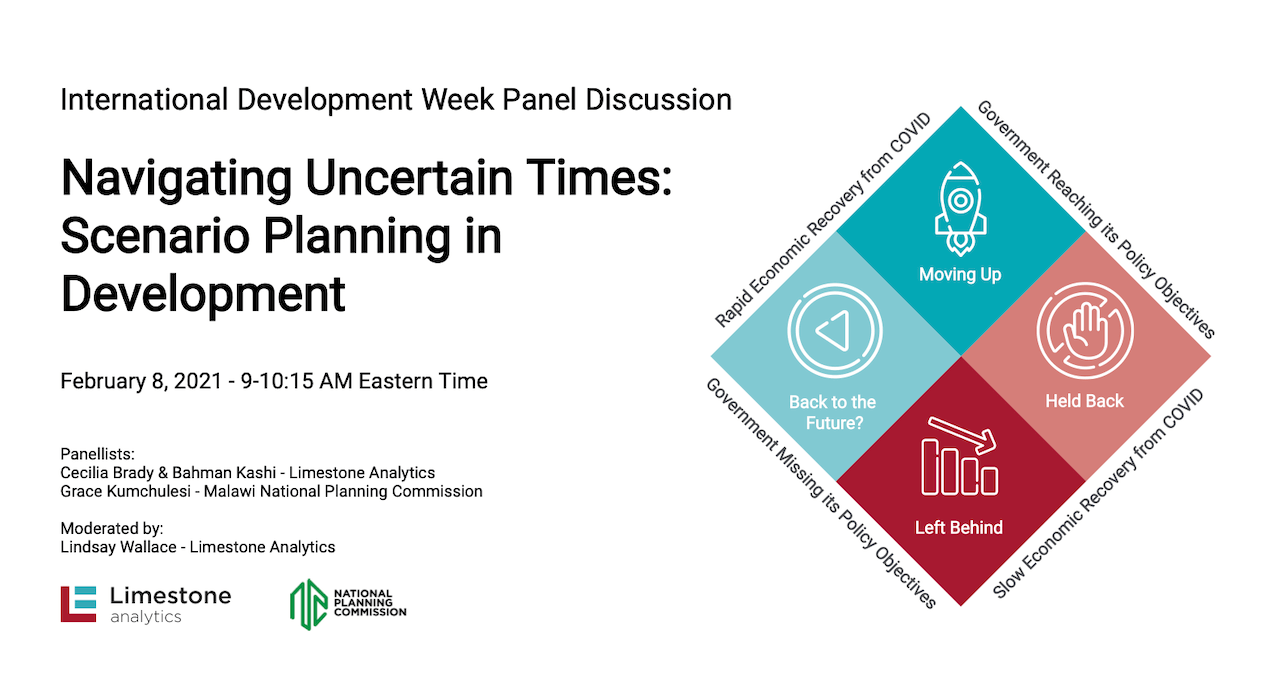
Join us this International Development Week to learn about scenario planning as a tool to navigate uncertainty in international development, and how scenario planning can be used in planning for […]

According to Limestone’s latest modeling, a more-intense early-year lockdown may be less costly for the Canadian economy in the long run. Limestone’s STUDIO model, which provides rapid-response policy analysis to […]