
As the need for sustainable land management and environmental restoration grows, the Farmer-Managed Natural Regeneration (FMNR) program provides a practical and impactful solution. This low-cost, innovative technique encourages farmers to regenerate natural vegetation on their lands by selectively protecting and nurturing native trees and shrubs. This simple practice helps restore degraded lands while strengthening local communities, paving the way for both environmental recovery and economic resilience.
To better understand the full impact of these efforts, Limestone Analytics conducted a comprehensive cost-benefit analysis (CBA) of World Vision Canada’s investments in this transformative initiative. Through a desk review of the FMNR program model and a complementary literature review focused on FMNR-related interventions, Limestone identified the following quantifiable impacts:
Limestone developed an analytical model to estimate the costs and benefits of a portfolio of 40 World Vision Canada projects across 29 countries between 2019 and 2023. The analysis revealed that increased crop income constitutes 51% of total benefits, followed by increased NTFP income (27%) and time savings from fuelwood collection (21%). Additionally, the FMNR-regenerated trees under this portfolio could reduce nearly 300,000 tons of CO2 emissions from the atmosphere over the 20-year analysis lifespan. However, the success of FMNR interventions hinges on a key risk: farmer adherence to FMNR practices, such as maintaining and protecting regenerated trees.
A key policy implication of this analysis is that farmers who invest time and resources in implementing FMNR practices are not fully compensated for the broader environmental (i.e., carbon sequestration) benefits they generate. This creates a disconnect between the costs farmers bear and the environmental benefits they provide. To address this, policy mechanisms such as carbon credit payments could be introduced, ensuring that farmers receive fair compensation for their contributions to CO2 mitigation while incentivizing further adoption of sustainable land management practices such as FMNR.

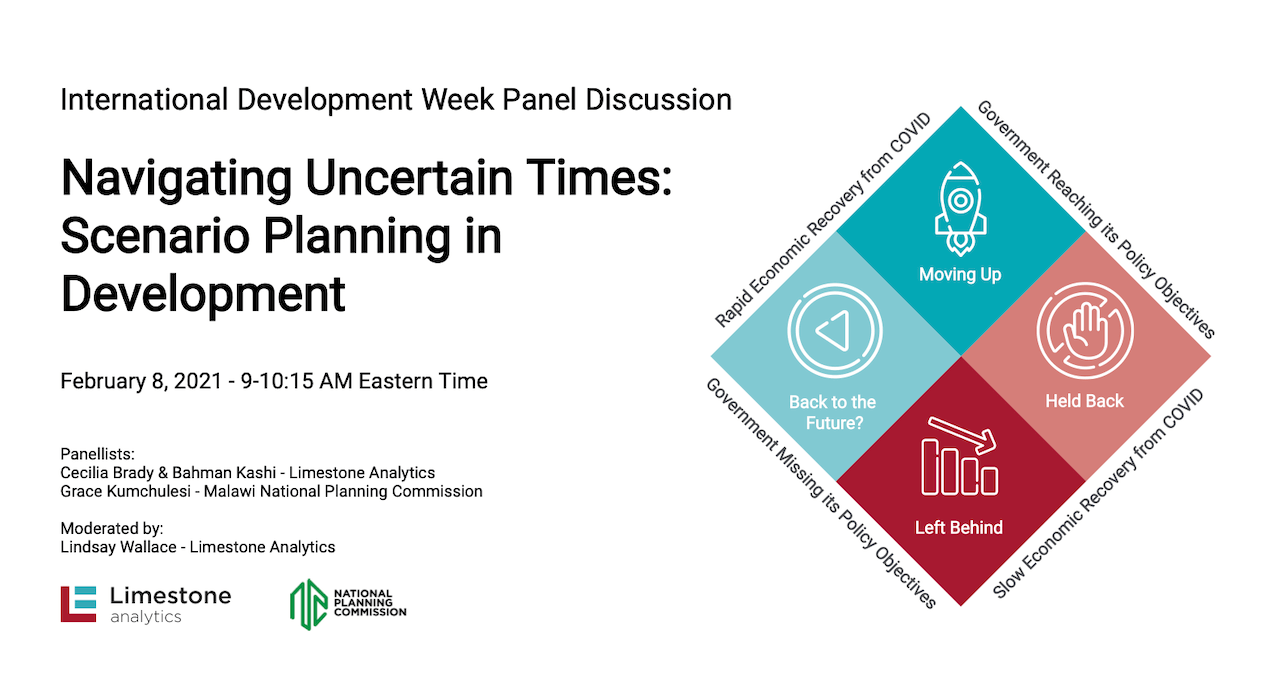
Join us this International Development Week to learn about scenario planning as a tool to navigate uncertainty in international development, and how scenario planning can be used in planning for […]

According to Limestone’s latest modeling, a more-intense early-year lockdown may be less costly for the Canadian economy in the long run. Limestone’s STUDIO model, which provides rapid-response policy analysis to […]